Farm and ranch tool #6 of 10
Manure fork
by Edward J. Thunderbird
Cleans stalls, pens and coops; sifts bedding.
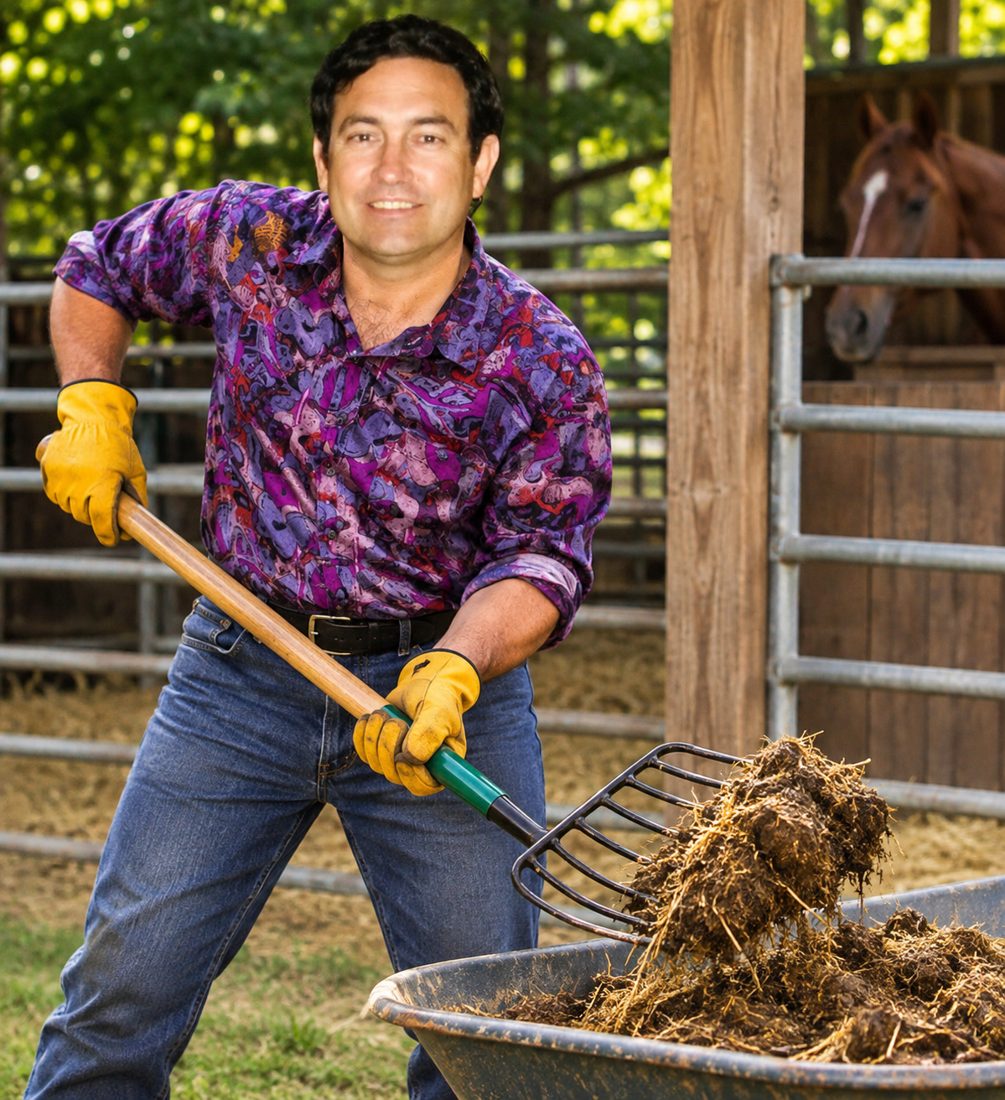
Why choose a manure fork
A manure fork has many close-set tines. It picks up manure and leaves the clean bedding behind, which saves bedding and money. A plastic-head stall fork is light; a steel one is strong.
Power version: a skid steer or tractor loader for barns.
What it is used for
- Cleaning horse stalls and goat pens
- Cleaning chicken coops
- Sifting shavings and pellet bedding
- Loading compost
How to use it
- Slide the tines under the pile and shake gently to sift out bedding.
- Lift the manure into a wheelbarrow or cart.
- Work from the back of the stall toward the door.
- Bank the clean bedding against the walls to dry.
Safety
- Wear gloves and boots; wash your hands after.
- Keep it away from animals; never leave it in the stall.
Maintenance: keep it working
- Rinse it off; replace broken plastic tines or the head.
- Keep a steel head clean and oiled.
What to look for when you buy
- Plastic head for shavings and pellets
- Steel head for straw and heavy use
- A length that lets you stand up straight
- Replaceable head
Where to buy it and what it costs
Typical price: $25 to $60. Three good choices:
Budget
Fortex or Tractor Supply plastic stall fork
about $25 to $30
Light and cheap.
Best value
Future Fork or Noble Outfitters stall fork
about $30 to $45
Fine tines sift well.
Steel
Ames 10-tine steel manure fork
about $40 to $60
For straw and big pens.
Shop for any manure fork
Prices are typical U.S. store prices checked November 17, 2026. They change often with sales; check the store. Tools Critical is not paid by any store or brand.