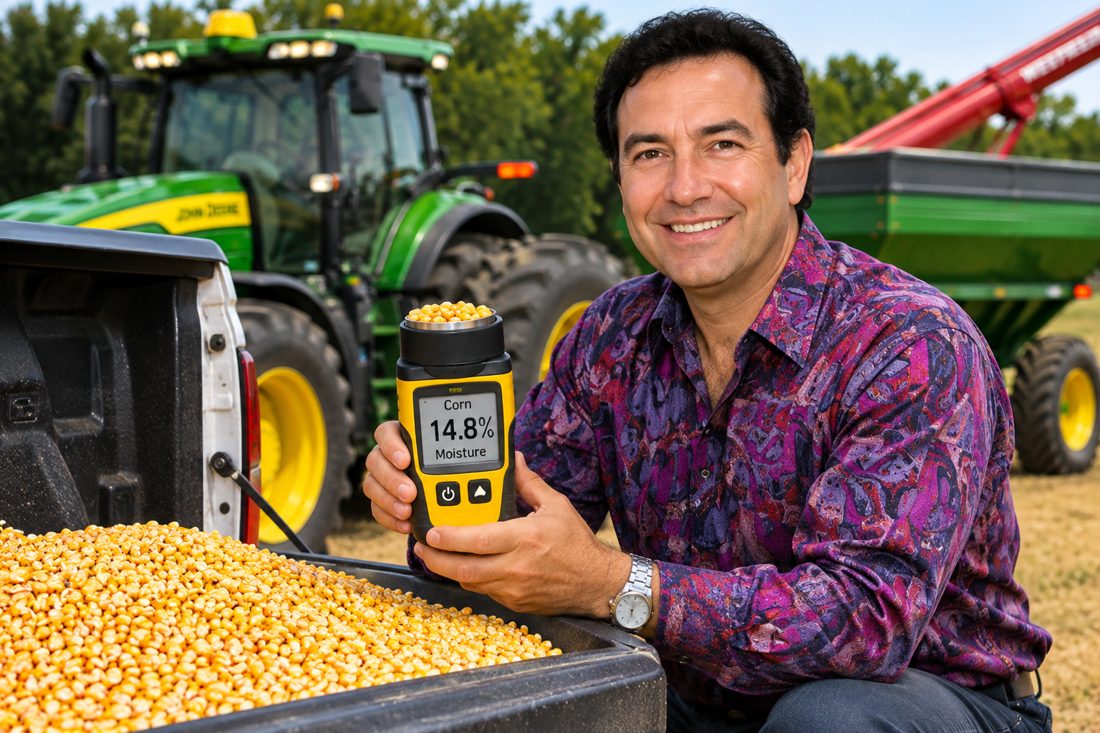
Grain moisture meter
Tells you when grain is dry enough to harvest and store.
Why choose a grain moisture meter
Grain that is too wet spoils and heats in the bin; grain that is too dry shatters and loses weight you get paid for. A moisture meter tells you when to start the combine and whether the grain must be dried before storing.
No small-plot version needed; bite-test and experience help, but a meter is better.
What it is used for
- Deciding when to start harvest
- Checking grain going into the bin
- Checking stored grain during the winter
- Checking hay before baling (hay meter)
How to use it
- Take a sample from the combine tank or wagon, not just one handful.
- Let hot grain cool before testing for an accurate reading.
- Compare with the elevator reading to check your meter.
- Store most grains at 13 to 15 percent moisture (check your crop).
- No special hazard.
Maintenance: keep it working
- Keep it clean and dry; replace the battery.
- Check it against the elevator each harvest.
What to look for when you buy
- Meter with settings for your crops
- Temperature correction
- A hay probe meter if you bale
Where to buy it and what it costs
Typical price: $150 to $1,000. Three good choices:
Handheld grain moisture meter
about $150 to $300
Fine for small farms.
Dickey-john Mini GAC
about $400 to $700
Accurate; used by many farmers.
Delmhorst or Agratronix hay probe
about $250 to $1,000
Bale hay at a safe moisture.
For tractors and field equipment, also check local dealers, farm auctions, Craigslist and Facebook Marketplace, and sites like TractorHouse and Machinery Pete. Have a mechanic look at used equipment before you buy.
Shop for any grain moisture meter
Prices are typical U.S. store prices checked November 17, 2026. They change often with sales; check the store. Tools Critical is not paid by any store or brand.