Gardening tool #5 of 10
Digging fork
by Edward J. Thunderbird
Loosens hard soil and lifts potatoes and root crops.
Why choose a digging fork
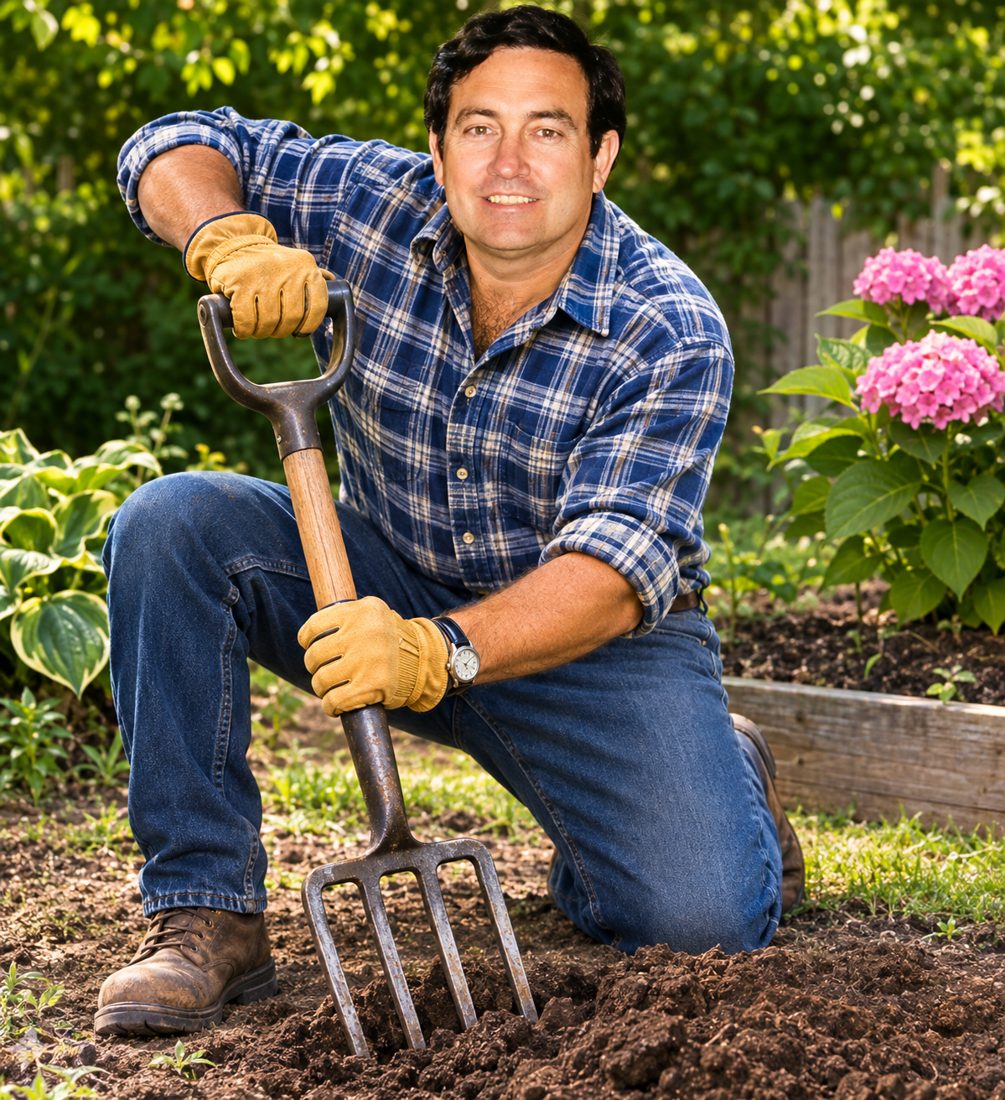
A digging fork (spading fork) has four strong, flat tines. It breaks up compacted or rocky soil more easily than a spade, lifts root crops without slicing them, and turns compost.
Power help: a tiller loosens big areas; a broadfork loosens deep soil by hand.
What it is used for
- Loosening soil before planting
- Harvesting potatoes, carrots and garlic
- Turning compost
- Dividing clumps of perennials
How to use it
- Push the tines straight down with your foot, to their full length.
- Pull the handle back a little to loosen the soil; do not pry hard.
- For potatoes, dig a foot out from the plant and lift from below.
- Work backward across the bed so you do not stand on loosened soil.
Safety
- Wear boots; tines go through shoes.
- Do not pry on rocks: bent tines and back strains both happen.
Maintenance: keep it working
- Clean off soil and dry the tines.
- Straighten a slightly bent tine in a vise.
- Oil the head and handle in the fall.
What to look for when you buy
- Forged steel tines, square or flat, not thin round wire
- Solid socket where head meets handle
- D-handle or long handle to suit your height
- Weight you can lift all day
Where to buy it and what it costs
Typical price: $30 to $90. Three good choices:
Budget
True Temper or Ames spading fork
about $30 to $40
Good for loose soil.
Best value
Fiskars 4-tine digging fork
about $40 to $50
Strong steel; won't snap.
Lifetime
Clarington Forge or DeWit digging fork
about $70 to $90
Forged tines for hard and rocky ground.
Shop for any digging fork
Prices are typical U.S. store prices checked November 17, 2026. They change often with sales; check the store. Tools Critical is not paid by any store or brand.