Gardening tool #4 of 10
Garden spade
by Edward J. Thunderbird
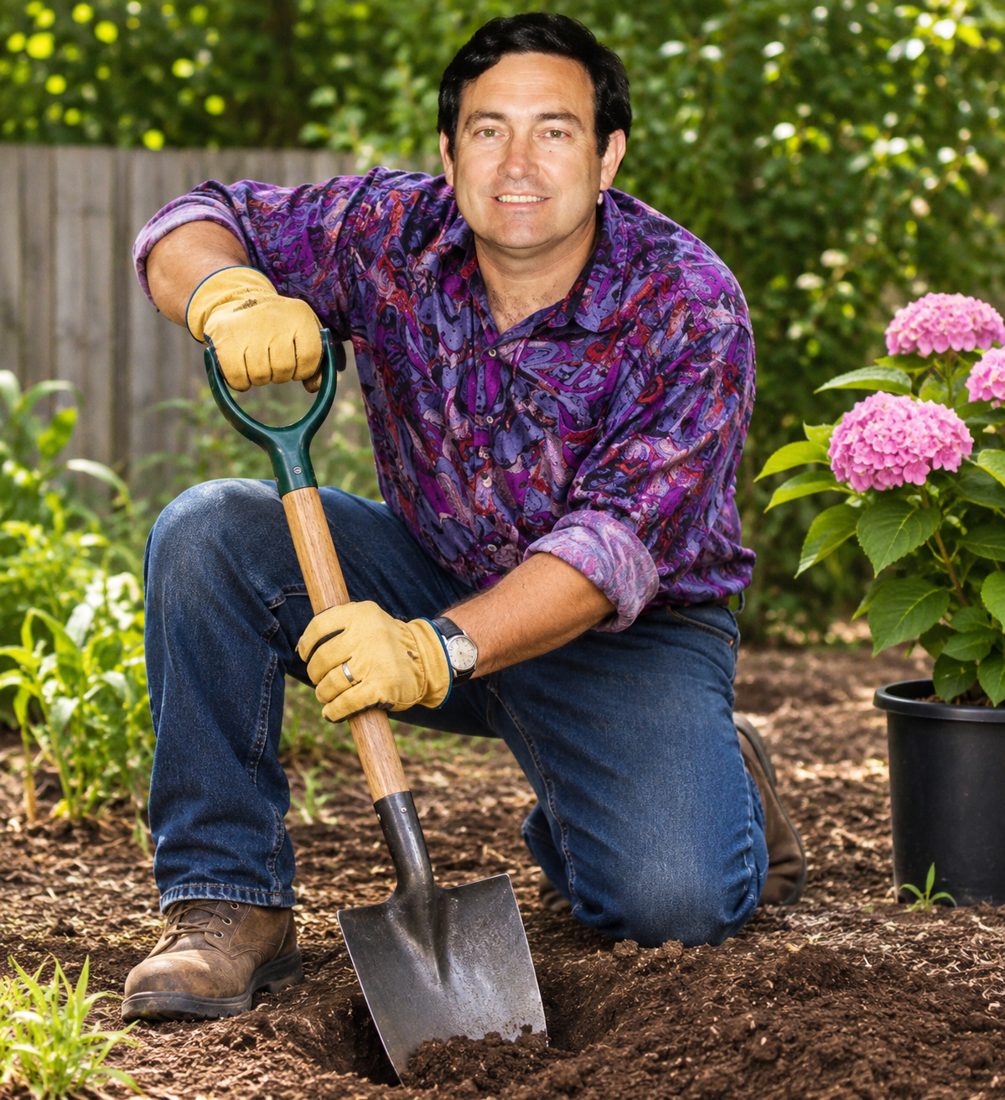
Flat blade for edging beds, cutting sod and digging straight-sided holes.
Why choose a garden spade
A spade has a flat, square blade. It cuts clean edges along beds and paths, slices under sod, and digs straight down, where a shovel would scoop. It is also the best tool for dividing perennials.
Power help: a power edger for long edges.
What it is used for
- Cutting clean edges along beds and walks
- Lifting sod
- Dividing perennials
- Digging straight-sided holes and trenches
How to use it
- Hold the blade straight up and down and step on it to drive it in.
- For an edge, push it in along a string line, one blade-width at a time.
- To lift sod, cut the outline, then slide the blade flat under it.
- Lever gently; spades are for cutting, not prying rocks.
Safety
- Wear boots when stepping on the blade.
- Keep your feet clear of the edge when chopping.
Maintenance: keep it working
- Clean and dry it after use.
- Keep the edge sharp with a file; a sharp spade cuts roots easily.
- Oil the blade and wooden handle before winter.
What to look for when you buy
- Forged steel blade, or stainless for sticky clay
- D-handle for control; long handle for less bending
- A step (tread) on top of the blade
- Strong socket where the handle meets the blade
Where to buy it and what it costs
Typical price: $25 to $90. Three good choices:
Budget
Ames or True Temper D-handle spade
about $25 to $35
Good for light digging and edging.
Best value
Fiskars steel D-handle spade
about $40 to $50
All steel; hard to break.
Lifetime
Spear & Jackson stainless border spade
about $60 to $90
Clay slides off stainless.
Shop for any garden spade
Prices are typical U.S. store prices checked November 17, 2026. They change often with sales; check the store. Tools Critical is not paid by any store or brand.