Soil test
Tells you the pH and nutrients before you plant.
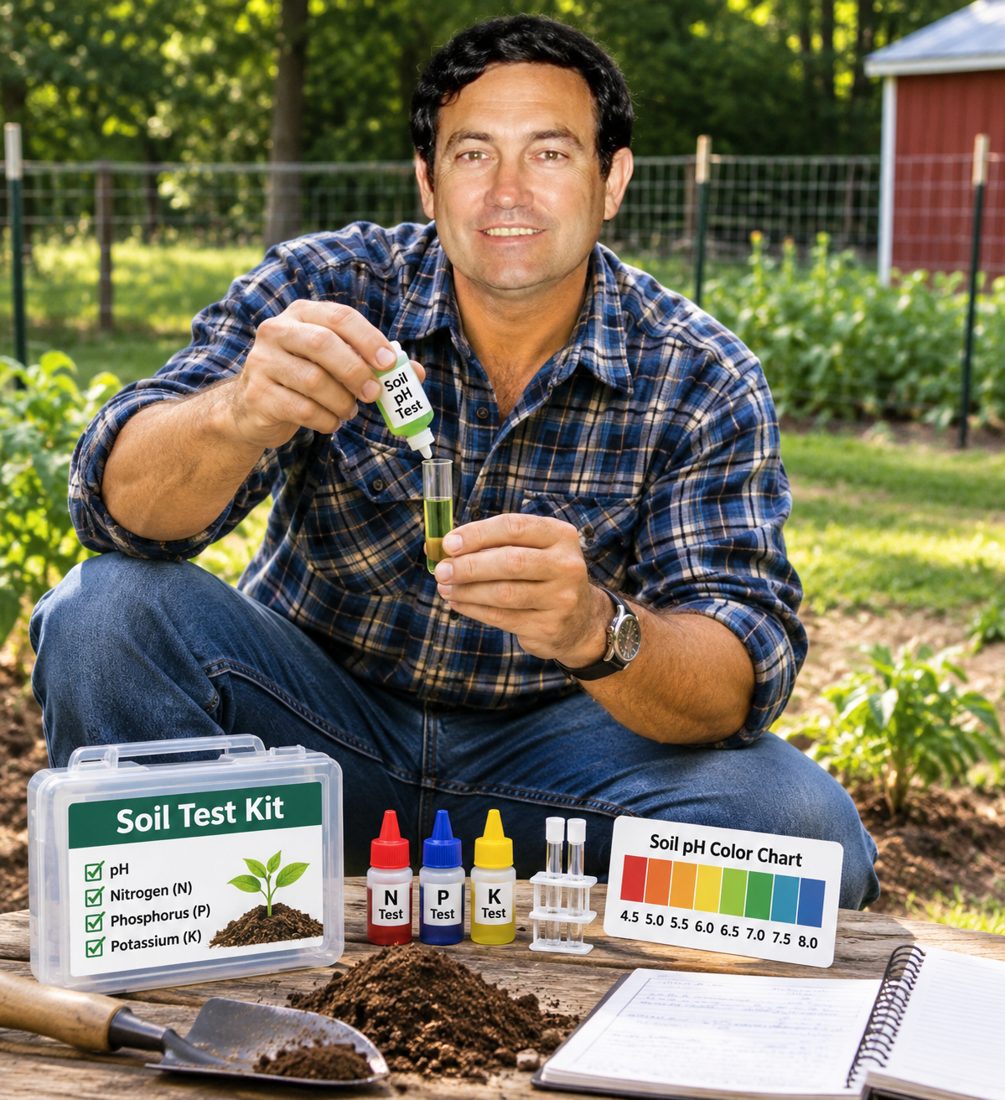
Why choose a soil test
Most crop problems start in the soil. A soil test tells you the pH and whether the field needs lime, nitrogen, phosphorus or potassium, so you buy only what the crop needs. On a field, a lab test through your county extension office is the right way: about $15 to $30 a sample, with lime and fertilizer recommendations per acre for the crop you name.
Small plot: a trowel for samples and a home kit.
What it is used for
- Checking pH before planting
- Deciding how much lime to spread
- Deciding what fertilizer to buy, per acre
- Checking a field with poor yields
How to use it
- Divide the field into areas of the same soil and history (about 10 to 20 acres each).
- Take 15 to 20 cores per area, 6 to 8 inches deep, with a soil probe, in a zigzag.
- Mix them in a clean bucket, fill a sample bag and mail it to the lab.
- Spread lime in the fall or several months before planting; it works slowly.
- Read the kit or lab instructions.
Maintenance: keep it working
- Keep the probe clean and dry; label bags clearly.
What to look for when you buy
- A county extension or commercial lab test for fields
- A steel soil probe (about $40 to $60)
- A home kit only for gardens
Where to buy it and what it costs
Typical price: $15 to $60. Three good choices:
County extension soil lab test
about $15 to $30 a sample
Recommendations for your crop.
Soil sampling probe, 12 to 21 inch
about $40 to $60
Fast, even cores.
Luster Leaf Rapitest kit
about $15 to $25
Gardens and small plots.
For tractors and field equipment, also check local dealers, farm auctions, Craigslist and Facebook Marketplace, and sites like TractorHouse and Machinery Pete. Have a mechanic look at used equipment before you buy.
Shop for any soil test
Prices are typical U.S. store prices checked November 17, 2026. They change often with sales; check the store. Tools Critical is not paid by any store or brand.