Sprayer
Sprays weed control, fungicide and liquid fertilizer.
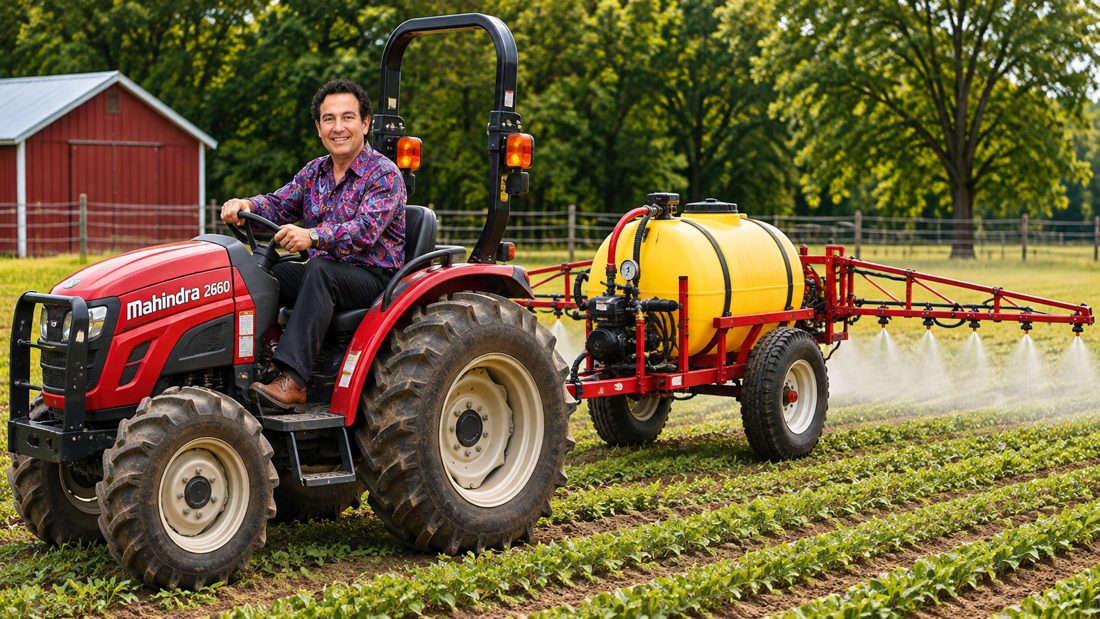
Why choose a sprayer
A boom sprayer puts herbicide, fungicide, insecticide or liquid fertilizer evenly over the field. Used right, it controls weeds that would otherwise cut the yield. Many states require a pesticide applicator license for restricted-use products.
Small plot: a backpack sprayer, or a wheel hoe instead of herbicide.
What it is used for
- Weed control before and after planting
- Fungicide and insect control
- Liquid fertilizer
- Pasture weed control
How to use it
- Read and follow the product label: rate, crop, timing and protective gear.
- Calibrate: measure what each nozzle puts out in a minute and set your speed.
- Spray when winds are under 10 mph and no rain is due.
- Triple-rinse the tank and empty containers.
- Wear the gloves, eye protection and clothing the label requires.
- Mix and fill away from wells and streams.
- Keep people and animals out of the field for the label time.
Maintenance: keep it working
- Rinse the sprayer after every use; clean the nozzles and screens.
- Drain it before freezing; use pump antifreeze.
What to look for when you buy
- 3-point 50 to 200 gallon sprayer for small farms
- Boom 20 to 30 ft wide, with a hand wand
- Diaphragm pump
- Rinse tank
Where to buy it and what it costs
Typical price: $400 to $8,000. Three good choices:
ATV or 3-point 25 to 55 gallon sprayer
about $400 to $1,000
Small fields and pastures.
3-point 110 gallon boom sprayer (Fimco, Demco)
about $1,500 to $3,000
Common small-farm size.
Pull-type 300 to 500 gallon sprayer
about $4,000 to $8,000
For bigger acres.
For tractors and field equipment, also check local dealers, farm auctions, Craigslist and Facebook Marketplace, and sites like TractorHouse and Machinery Pete. Have a mechanic look at used equipment before you buy.
Shop for any sprayer
Prices are typical U.S. store prices checked November 17, 2026. They change often with sales; check the store. Tools Critical is not paid by any store or brand.